ewbsrilanka@gmail.com 120/10A, Vidya Mawatha, Colombo 07. +94 775 405 870

Follow Us

The Construction of Karawwa Bridge

  • Home
  • The Construction of Karawwa Bridge

The Construction of Karawwa Bridge (Loku Palama)

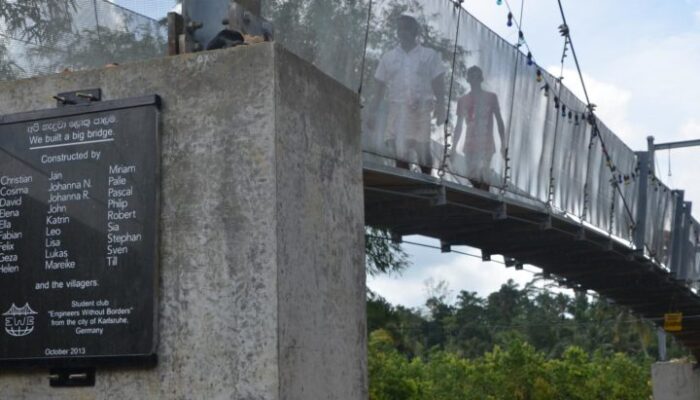
The Karawwa Bridge Project is a community-driven initiative undertaken by Engineers Without Borders Sri Lanka (EWB-SL) in collaboration with the EWB Karlsruhe Institute of Technology (KIT) team from Germany. Located in the rural village of Karawwa in the Ratnapura district of southwest Sri Lanka, this project addresses a critical need for safe and reliable river crossing for over 2,000 residents in the region.

The village of Karawwa and its surrounding settlements are separated by a branch of the Bentara River, which had long presented a major obstacle to daily life. Prior to the construction of the bridge, the only road bridge was located approximately 10 kilometers away, forcing farmers and schoolchildren to make long, exhausting treks—often carrying heavy loads or school bags. Most residents opted to cross the river directly, despite the serious dangers it posed during tropical storms, when the river would quickly rise and become a powerful, fast-flowing current. Tragically, there were reports of lives lost due to flooding.

Among those most affected were the 400 students attending the local school, about half of whom needed to cross the river daily. The situation not only compromised access to education but also hindered economic activity, as farmers struggled to transport their harvests of rice, cinnamon, and tea to markets on the opposite side.

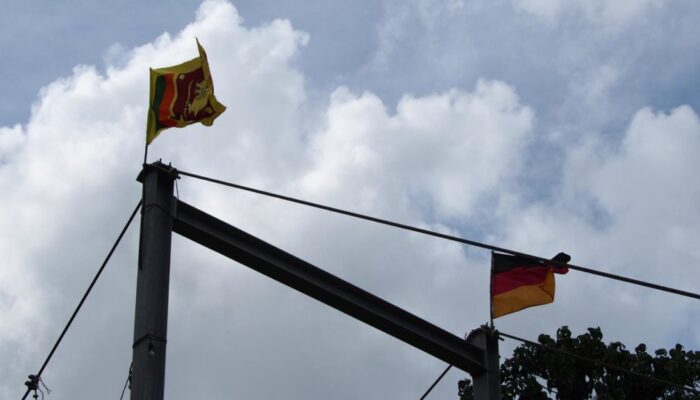
In response to urgent calls from the local mayor and religious leaders, EWB-SL and EWB-KIT partnered to design and construct a suspension bridge that would provide safe, year-round access across the river. This marks the second major collaboration between the two organizations, following the successful completion of the Pitigoda Bridge project.

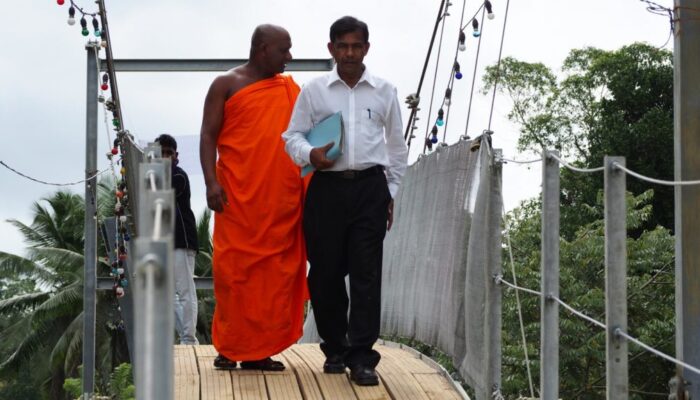
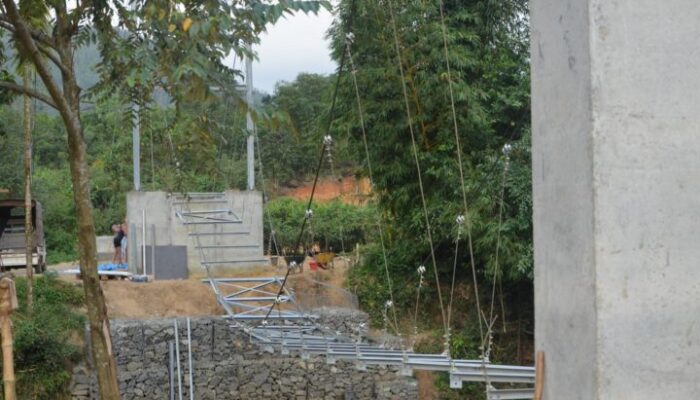
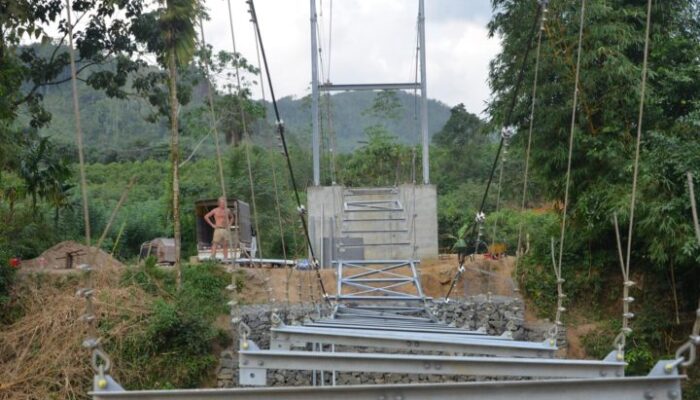
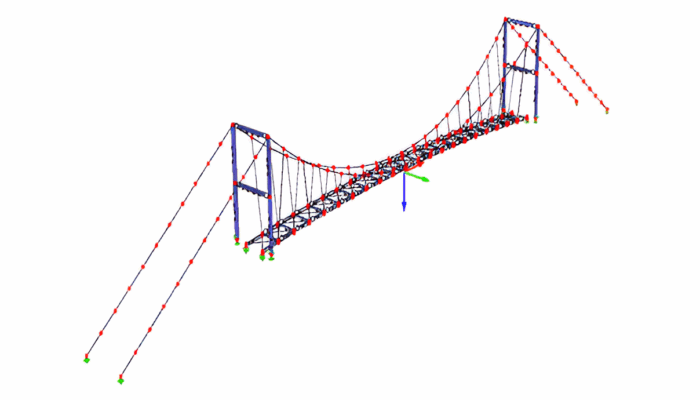
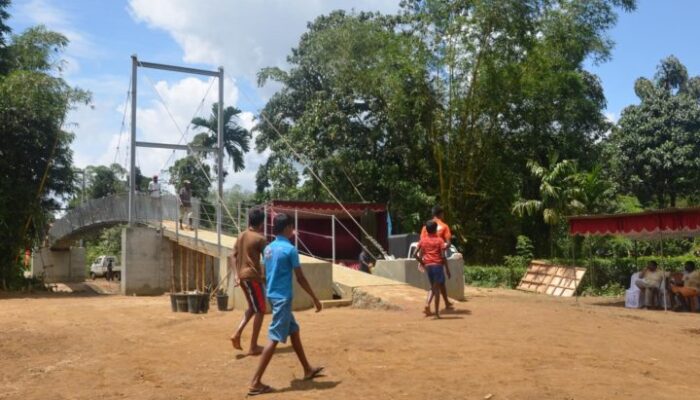
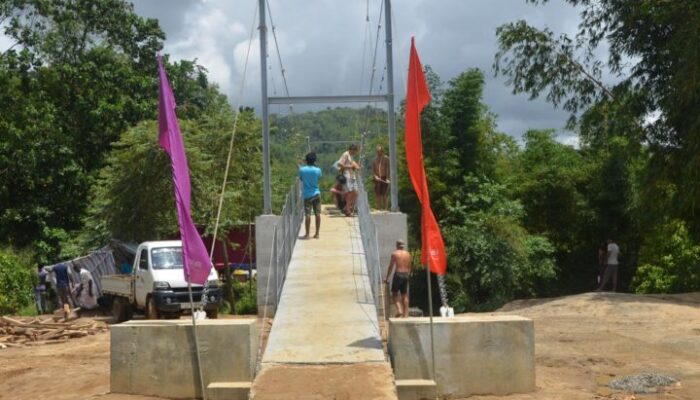
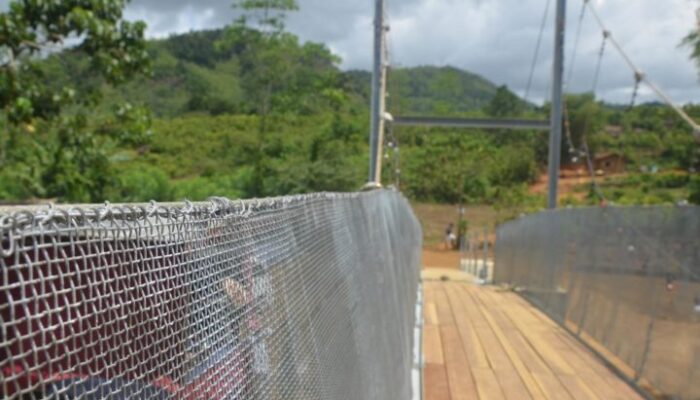
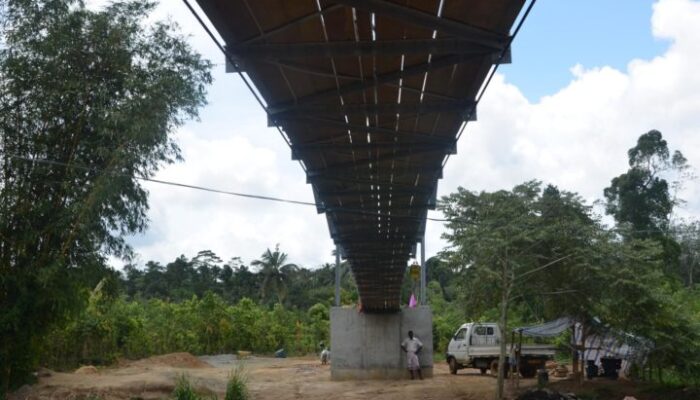
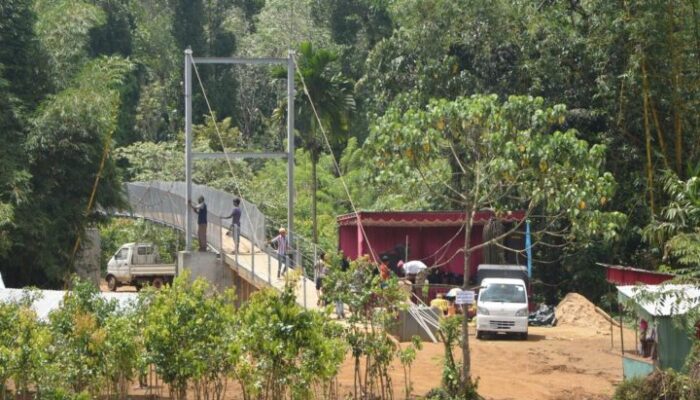
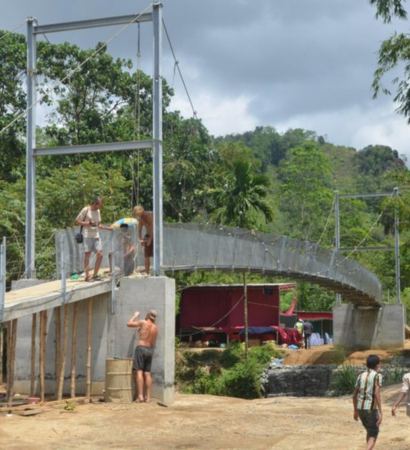
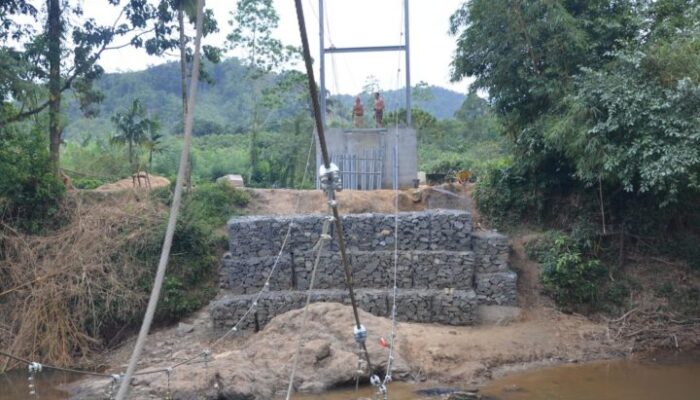
The Karawwa Suspension Bridge spans 30 meters and is elevated 2 meters above ground level to accommodate seasonal flooding. It features a 1.3-meter-wide wooden deck, supported by 6-meter-high steel pylons and accessed via 12-meter-long ramps on each side. The structure now connects more than eight surrounding villages, significantly improving mobility, safety, and access to essential services.

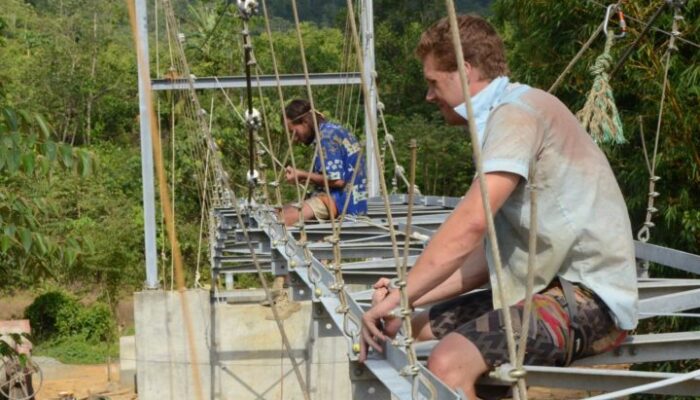
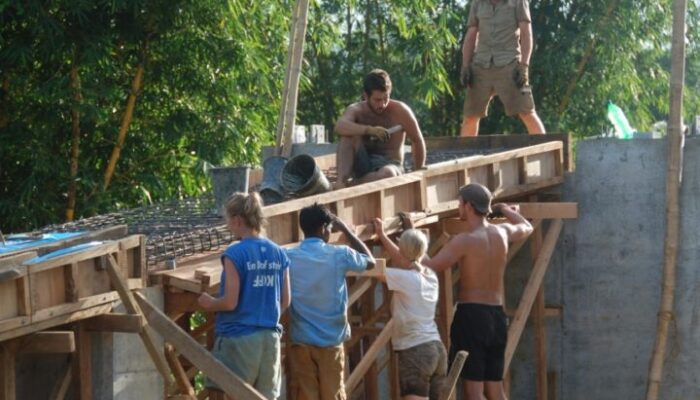
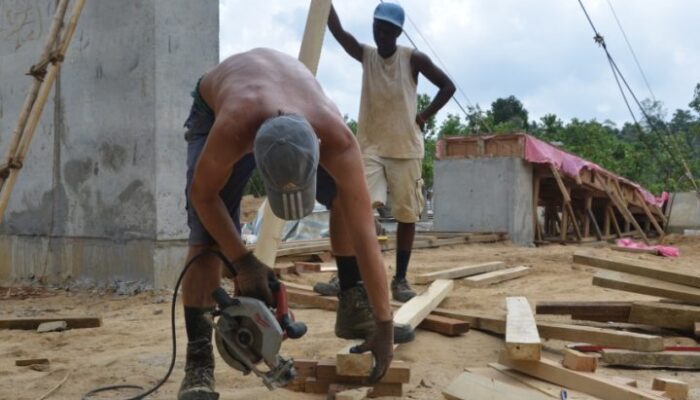
One of the most distinctive features of this project was its community-centered approach. Villagers were actively involved in the construction process—not only as laborers but also as learners—gaining valuable knowledge and skills in bridge maintenance. This empowered them to take ownership of the structure and ensure its long-term sustainability.

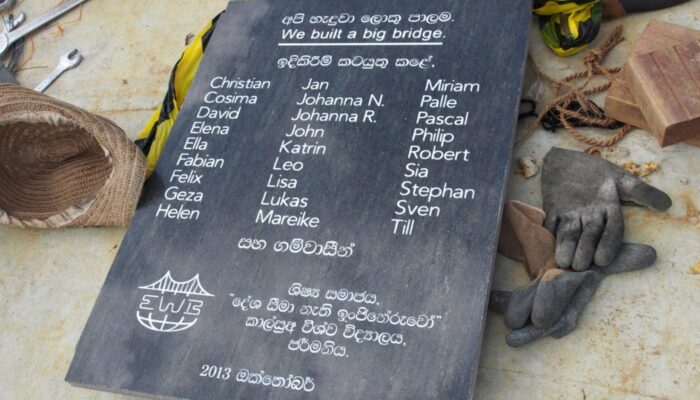
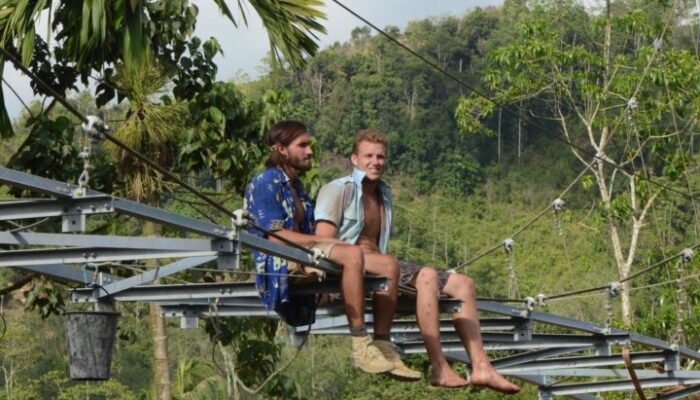
The project was led on-site by Mr. Sven Nagal as Project Manager, with academic and technical guidance provided by Prof. R. Dissanayake, President of EWB-SL. This collaboration served as a powerful example of international cooperation, engineering for social good, and student-led impact.

The Karawwa Bridge now serves as a lifeline for hundreds of people—improving access to education, boosting agricultural productivity, and enhancing the overall quality of life in the region. It also stands as a symbol of unity, resilience, and the transformative power of engineering in rural development.

Project Details: Karawwa Bridge (Loku Palama)

• Length: 56 m
• Width: 1.3 m
• Cost: approx. €50,000 + material and donations in kind of approx. €75,000 for Sri Lanka
• Total weight: 270 t
• Concrete: 110 m³
• Gabions: 42 m³
• Steel: 2.7 t
• Reinforcement: 3.1 t
• Wood for walking surface: 2 t
• Cement: 840 bags
• Ropes: 614 m
• Connecting elements for ropes: 817 pieces
• Screws: 530 pieces
• Unpaid working hours: Construction site: approx. 8100 hours
• Planning: approx. 3000 hours

Steel Cables

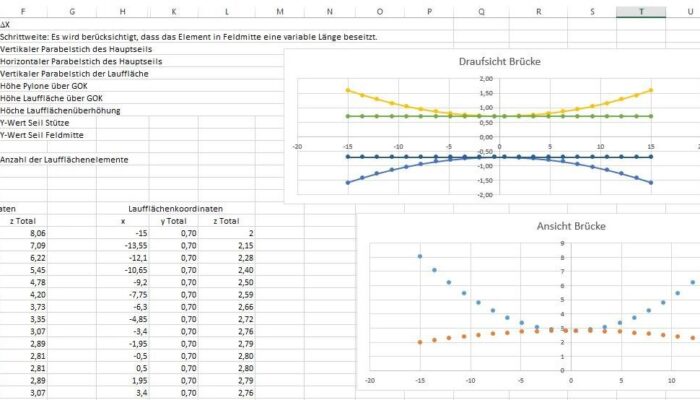
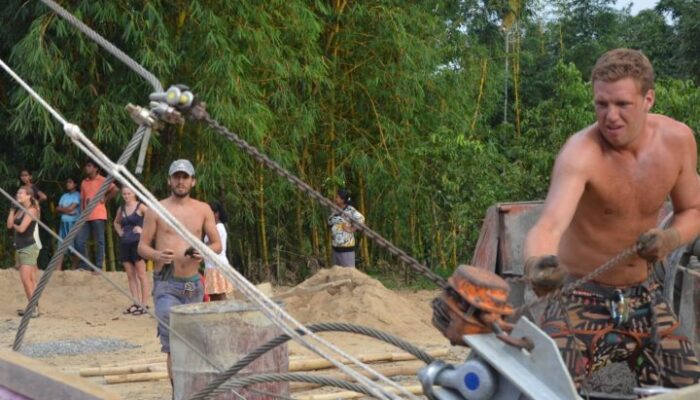
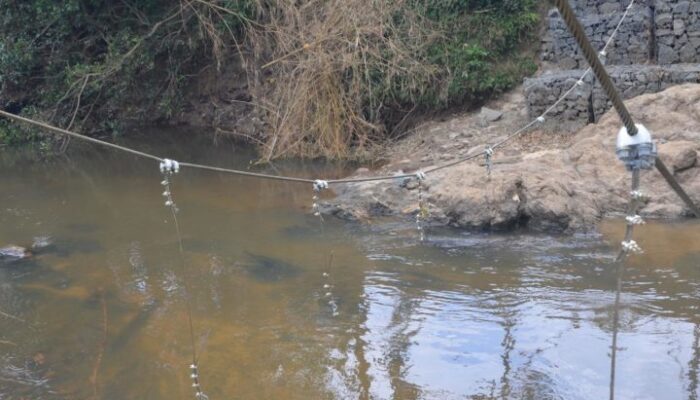
The Karawwa Bridge’s design is defined by its steel cables, generously donated by Pfeifer, a company based in Memmingen. The main suspension cable, central to the bridge’s structure, spans between the two riverbanks, reaching a height of over 8 meters above the pylons and forming a parabolic curve down to the deck and foundations.

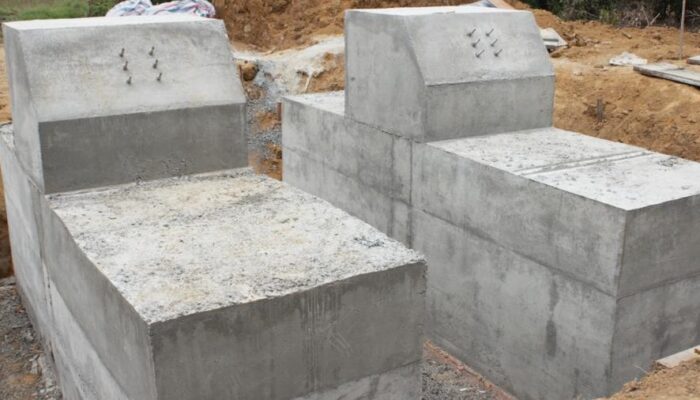
To meet the true definition of a suspension bridge, all loads on the cables are transferred into the ground through the foundations. Due to limited access for heavy machinery, anchor piles were not feasible. Instead, the team constructed large gravity foundations, each measuring 17 m³ and weighing a combined 163 tons. Their stability comes from both mass and friction with the soil.

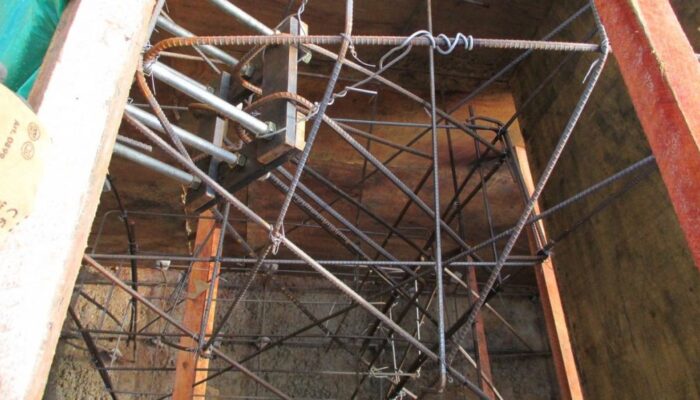
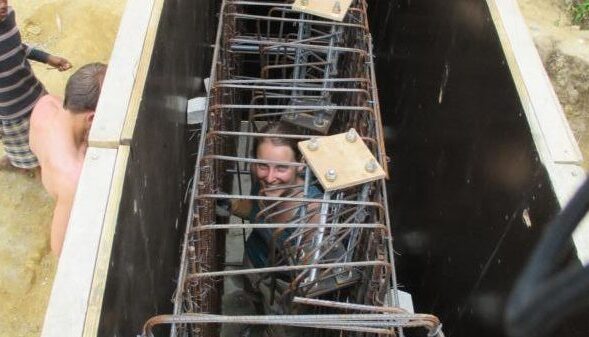
An internal steel reinforcement, nicknamed the “Rocket”, was used inside the foundations to securely anchor the cables—a unique solution inspired by launch pad structures.

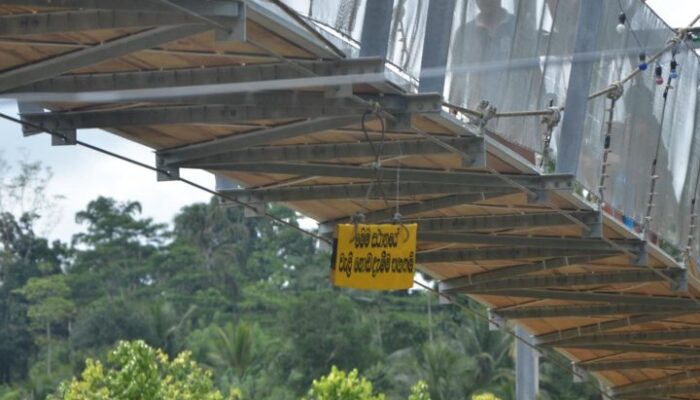
In addition to the main cable, a secondary tensioned cable runs beneath the wooden walkway, forming a rigid structure with the vertical hanger cables. To resist lateral forces like wind and flooding, the main cables were also curved in a second direction for added stability.

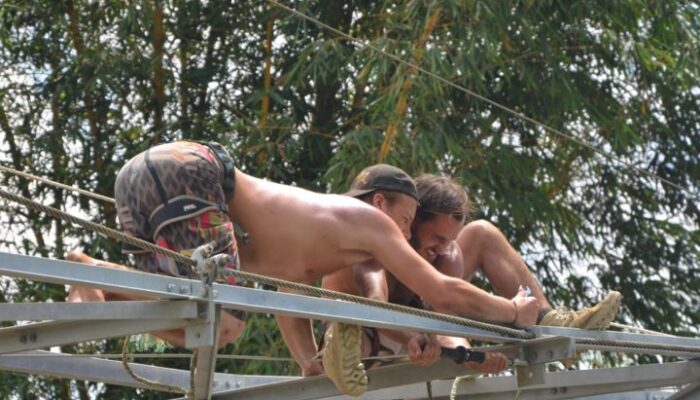
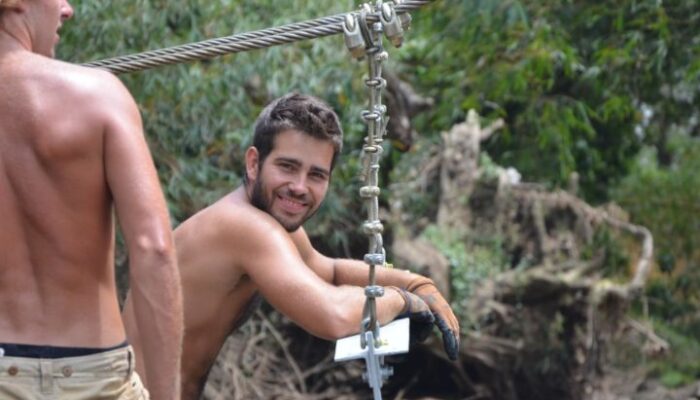
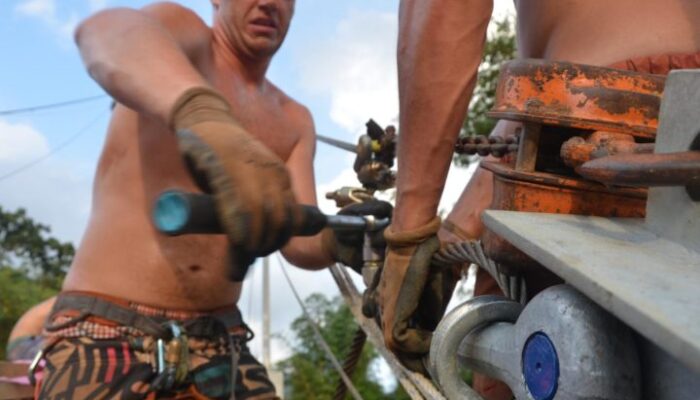
Final preparations included attaching cable clamps and thimbles at specific intervals to ready the steel cables for safe and efficient installation.

  • Connection of supporting cable anchor foundation

The Floor

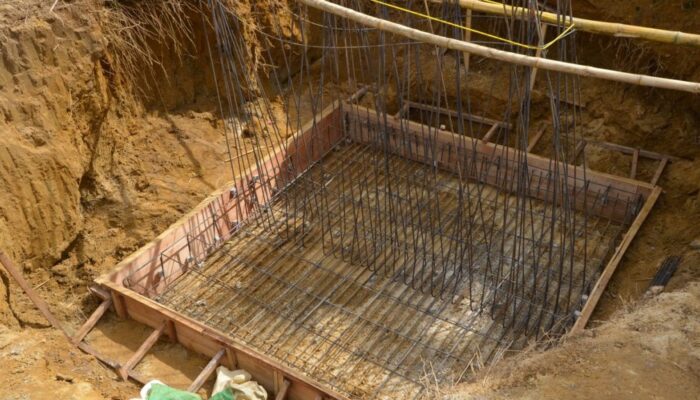
The ground beneath the Karawwa Bridge posed significant challenges—unpredictable, unstable, and poorly documented. With the expected soil report never arriving, last-minute tests raised serious concerns. Lacking reliable data, the team relied on conservative assumptions and safety-first calculations, resulting in oversized foundations and deep embedments. These required both groundwater control and heavy machinery to execute.

As excavation continued, further site assessments—resembling early-day geotechnical explorations—helped shape a practical and safe foundation approach.

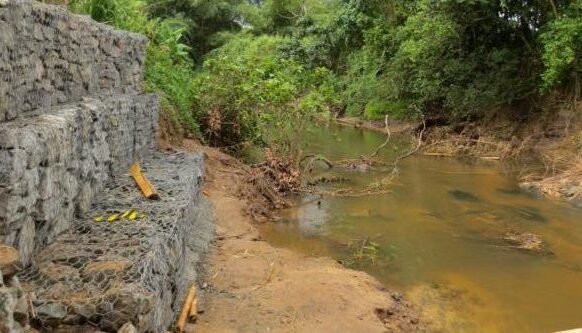
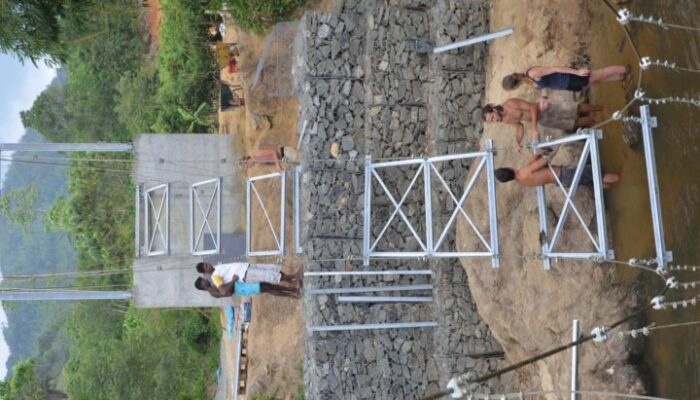
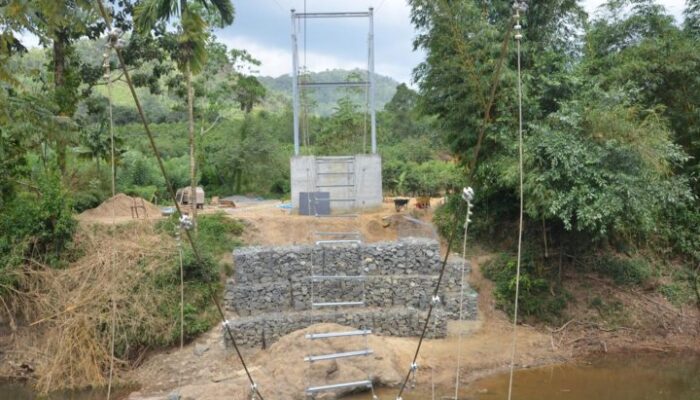
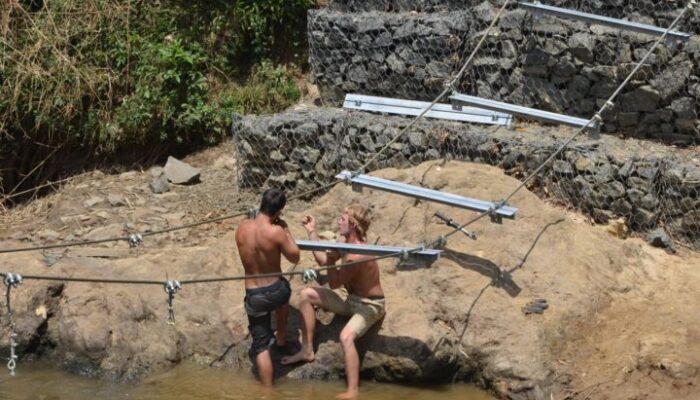
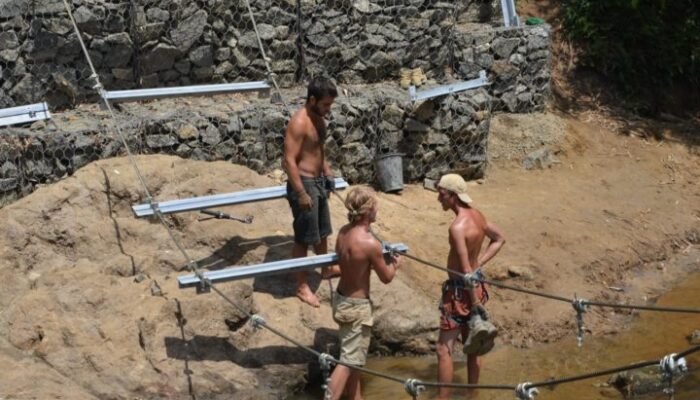
The main threats were slope instability and riverbank erosion. To tackle these, the team constructed a gabion wall, using over 40 m³ of boulders encased in wire mesh. Positioned with a filter layer behind it, the wall prevents soil erosion and stabilizes the slope under the pylon foundations. The massive weight of the gabions balances the foundation loads and resists sliding—like assembling a giant 3D puzzle, where precision and patience were key.

  • Foundation base

Steel Structure and Assembly

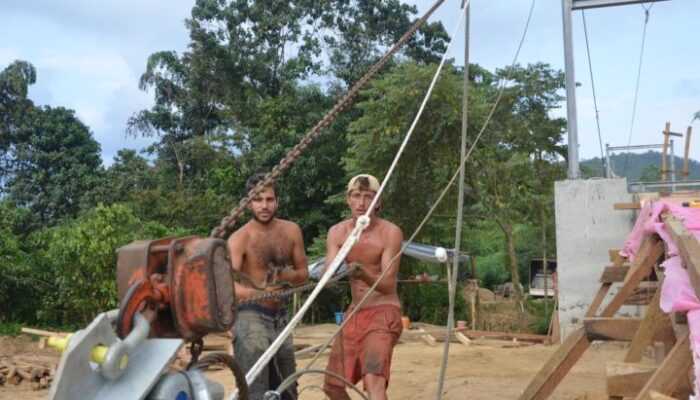
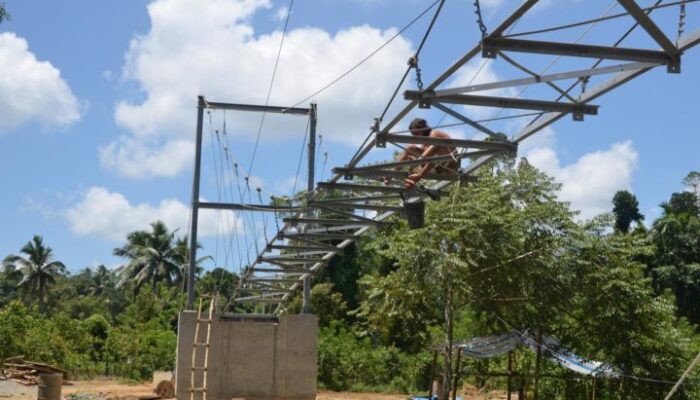
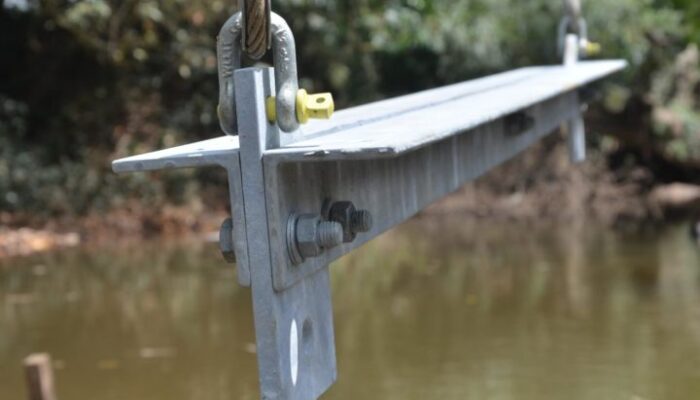
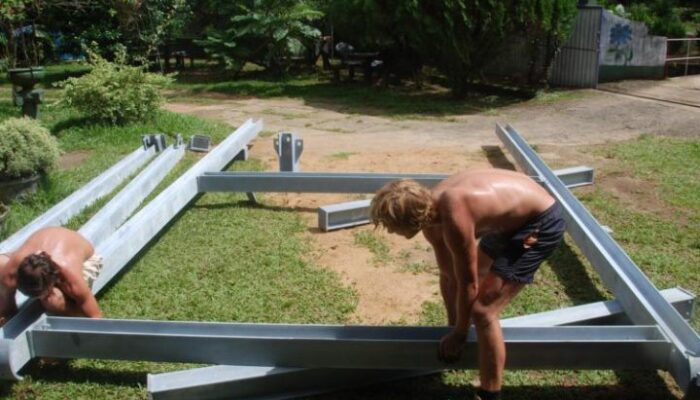
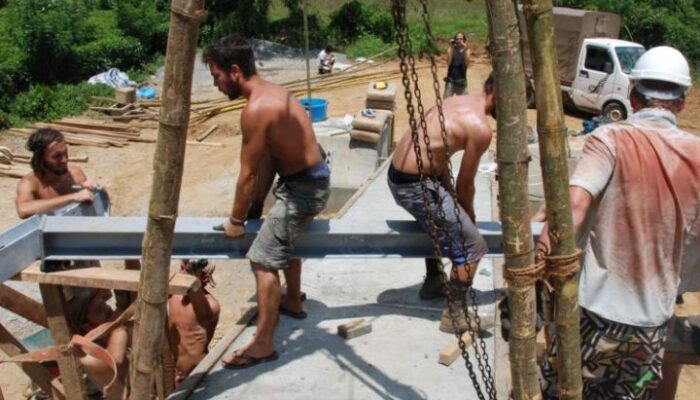
Building a bridge without prior experience meant constant trial and error, countless redesigns, and practical thinking. The goal: create a simple, modular steel structure that non-professionals could assemble—no welding, no cranes, no scaffolding.

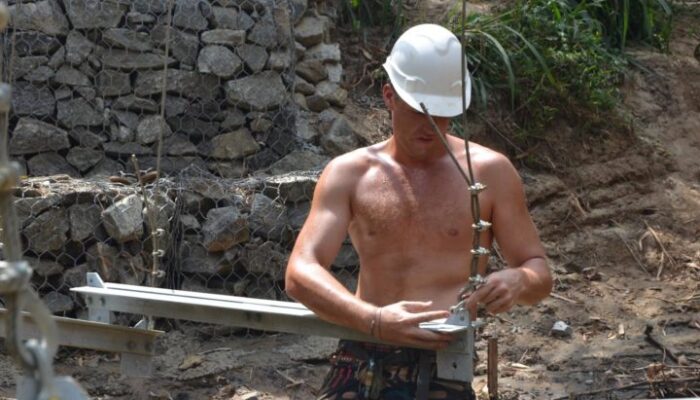
Designing the pylons and deck required creative solutions: load-bearing joints, lightweight components, and easy-to-assemble connections—much like an IKEA shelf. Budget limits and inconsistent local steel availability forced on-site design changes. Despite these challenges, the prototype fit perfectly, thanks to careful adjustments.

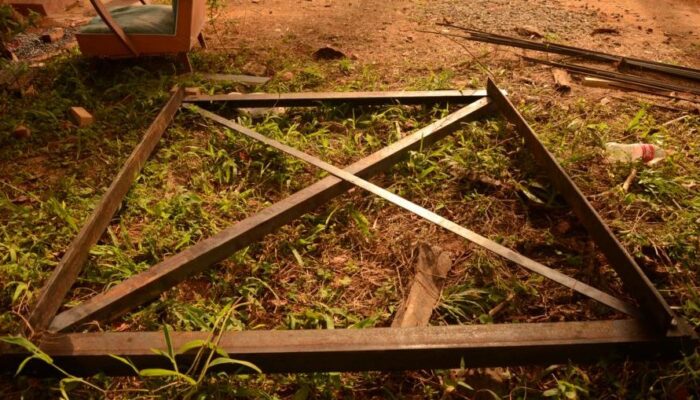
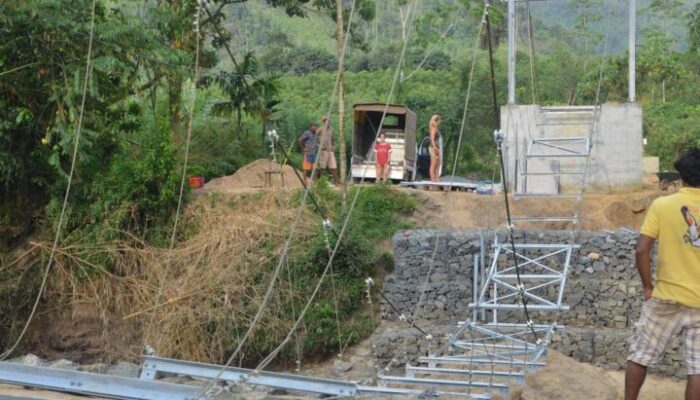
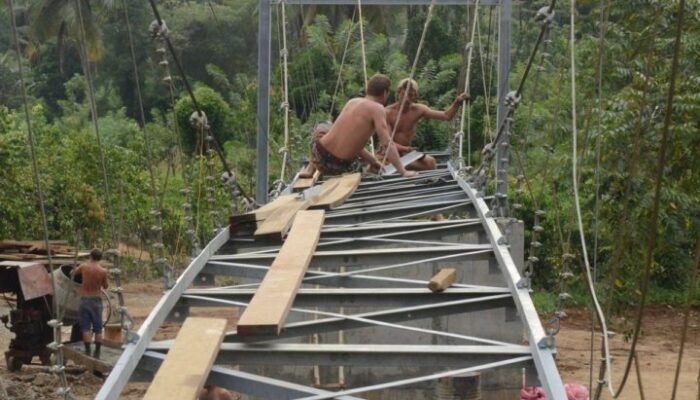
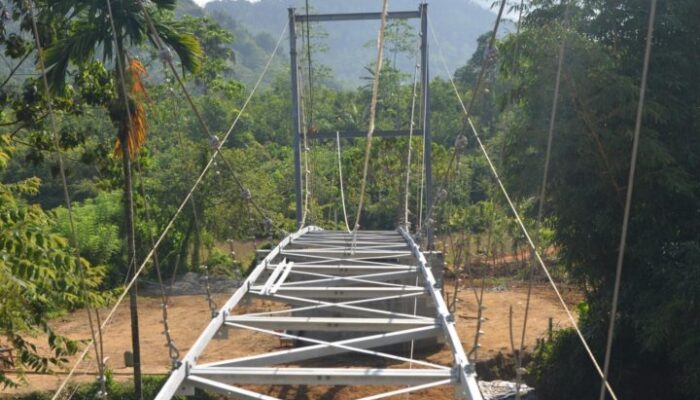
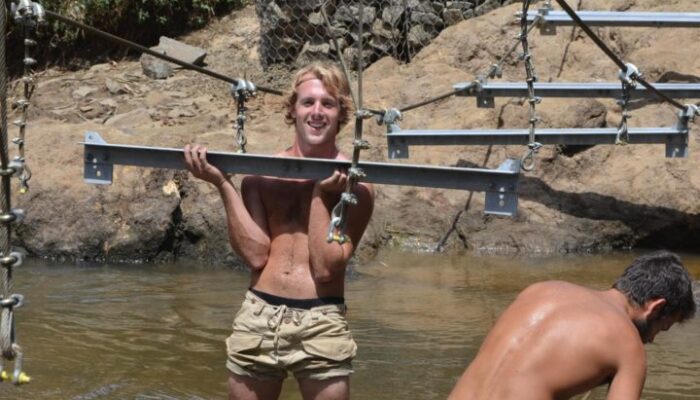
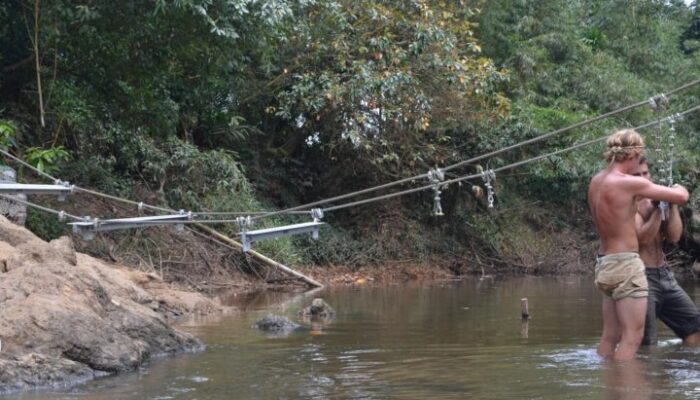
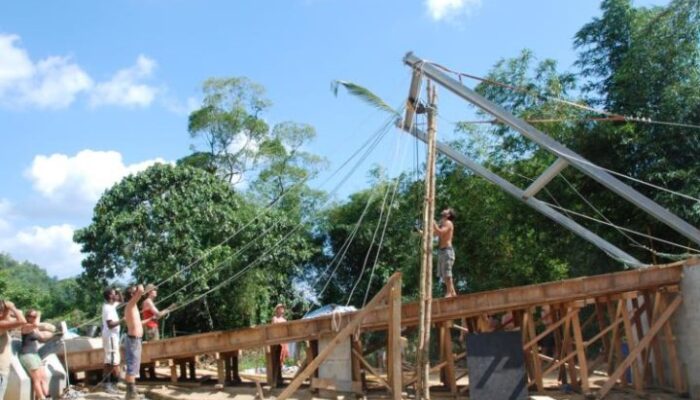
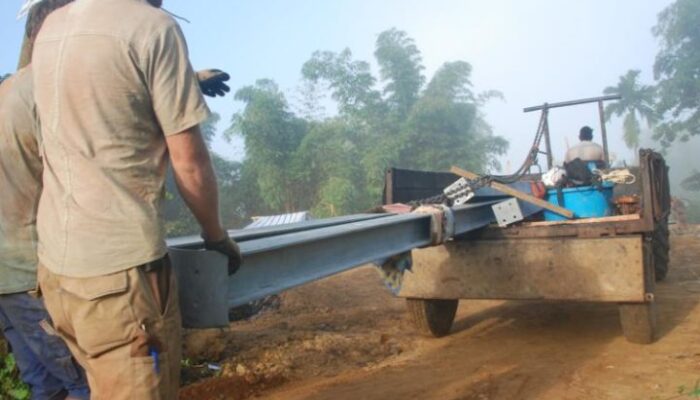
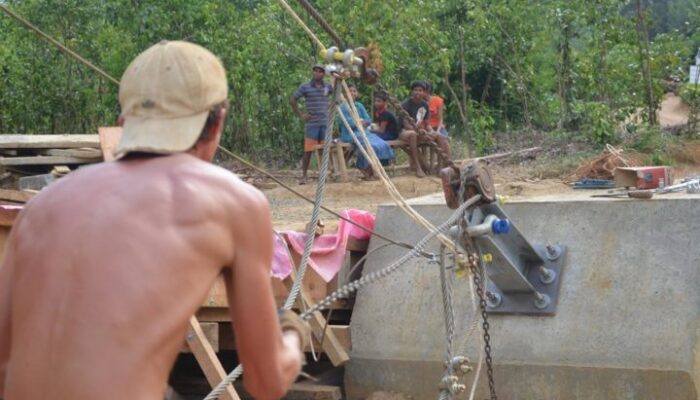
The 30-meter span was divided into 21 prefabricated segments. Crossbeams were cut, drilled, and corrosion-protected, then assembled using wedge-lock washers to prevent loosening. Before tensioning the main cables, the segments were pulled across the river and anchored over the pylons, forming a stable deck with X-bracing and longitudinal girders.

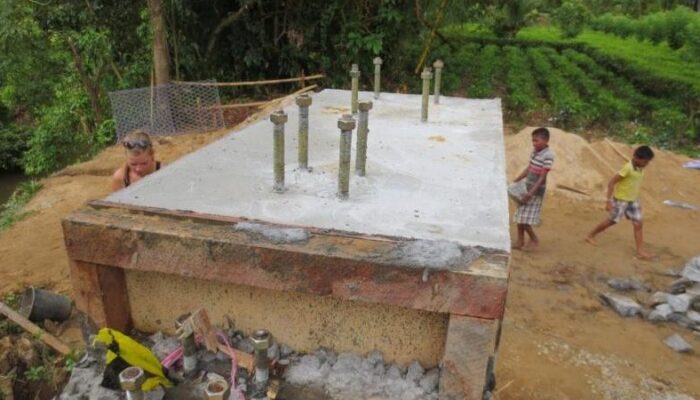
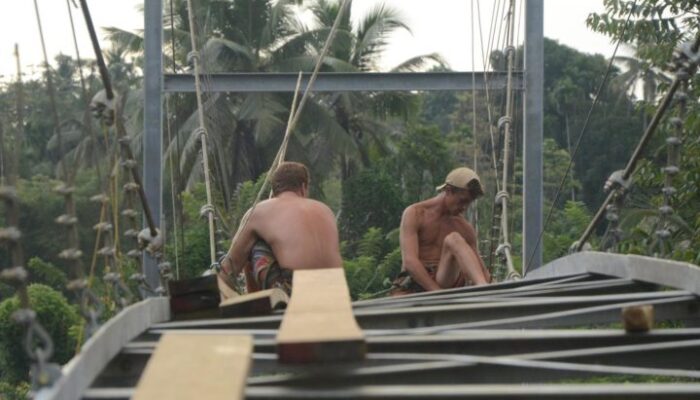
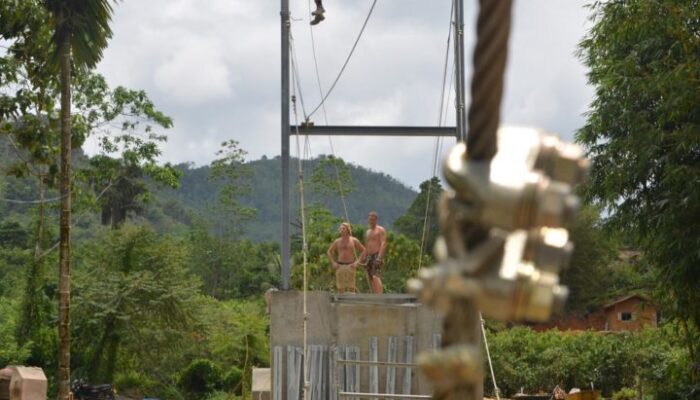
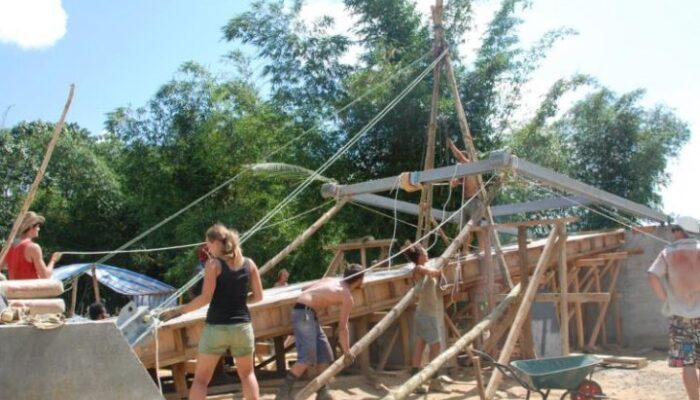
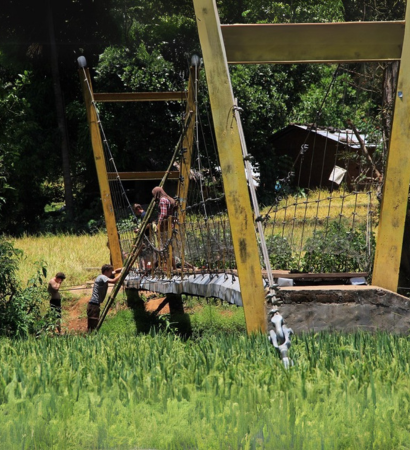
The Malaysian timber deck was screwed onto the crossbeams using steel-cutting screws, while the 8-meter-high pylons were hinged and rotated into place, then secured with heavy bolts. Threaded rods anchored the steel to the concrete pylons, ensuring a strong and visible connection backed by hidden reinforcement.

The following link shows the video on how to set up the pylons:

Durability and Protection

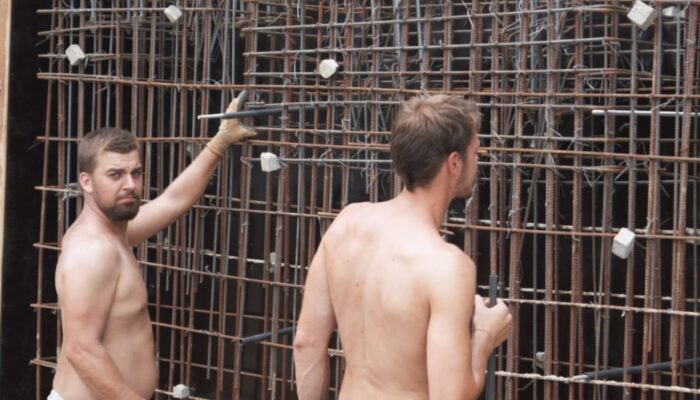
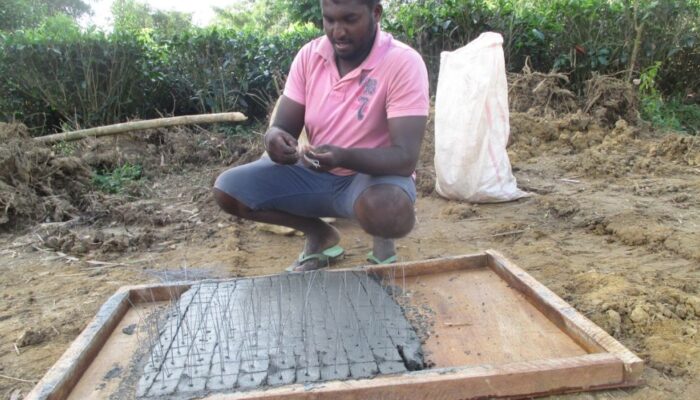
We used homemade spacers to maintain proper concrete cover, protecting the reinforcement from corrosion and ensuring surface integrity and structural stability for decades.

The decking is made of Bankirai, a dense tropical hardwood from Malaysia. Naturally resistant to rot, fungi, and insects, it requires no chemical treatment and doesn’t float due to its high weight.

Steel corrosion was another major concern. The island’s wet climate and moving steel parts pose a real rust risk. We designed joints to minimize water and dirt intrusion, even though minor corrosion would not severely affect structural safety.

Standard German corrosion protection methods proved unsuitable for local conditions. After exploring various options, we partnered with a company capable of hot-dip galvanizing our steel components. Thanks to precise calculations and management support, the bridge now has a reliable protective coating against rust and weathering.

  • Homemade spacers

Bridge Opening Ceremony
The opening ceremony marked the rewarding end to months of hard work. Just hours before it began, the team gathered for a final meeting to finalize speeches and prepare, with last-minute details still being handled.

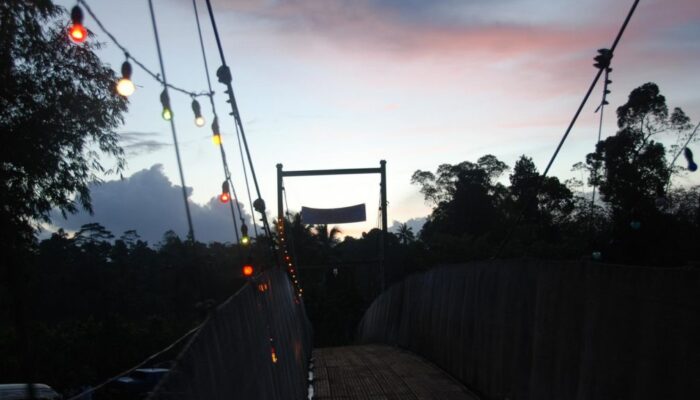
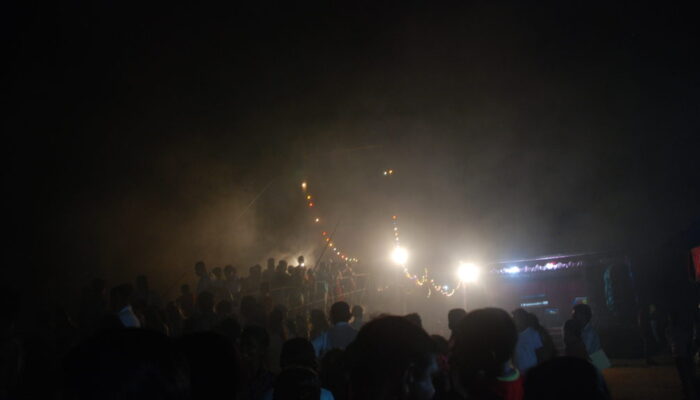
Host Buddhi took charge of organizing the event, arranging invitations, a stage, rain shelters, lighting, fireworks, music, and snacks. True to Sri Lankan tradition, the team arrived late, leaving the distinguished guests and priests waiting.

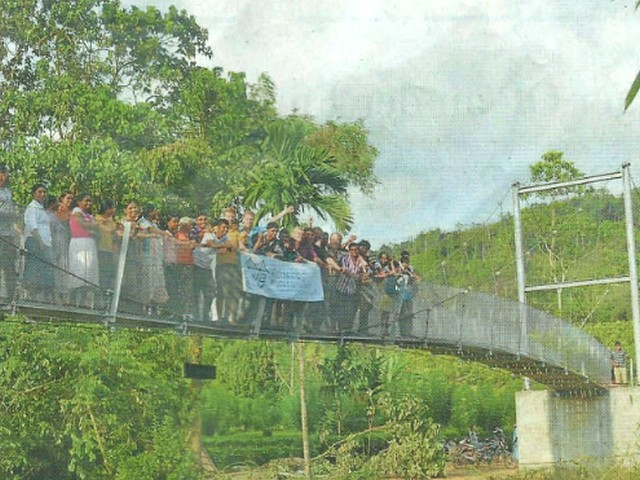
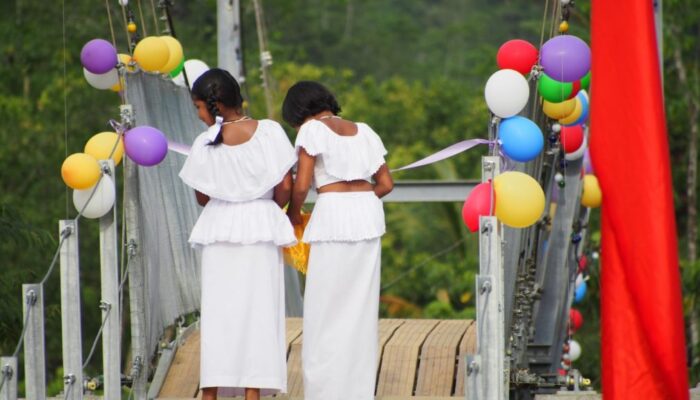
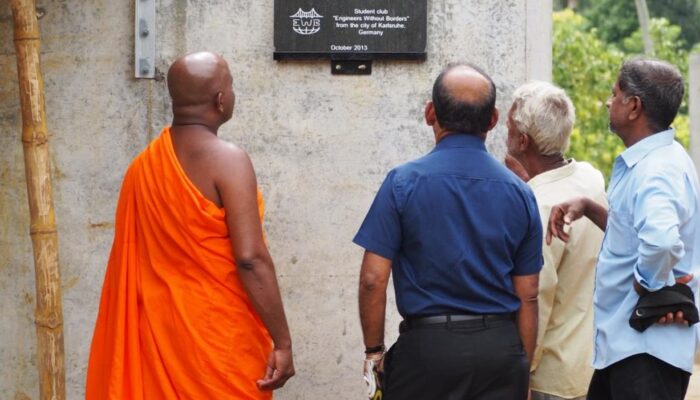
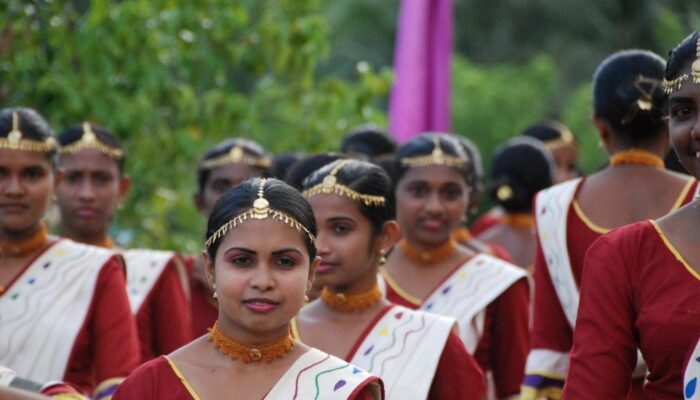
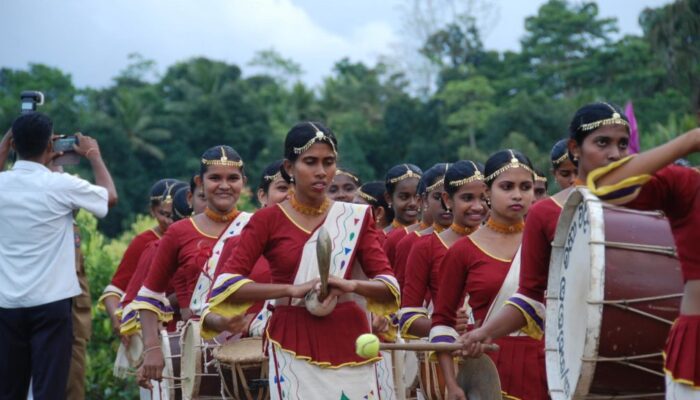
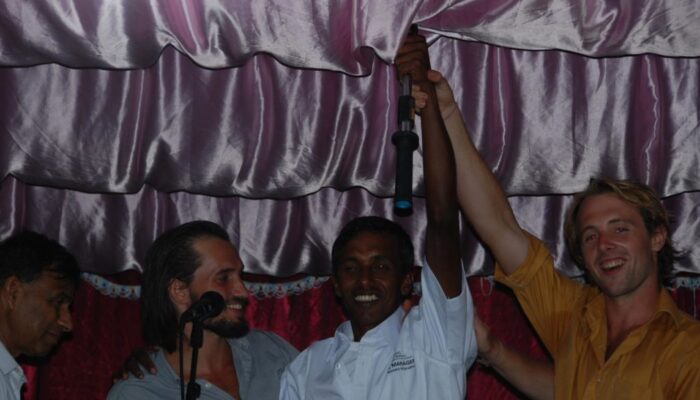
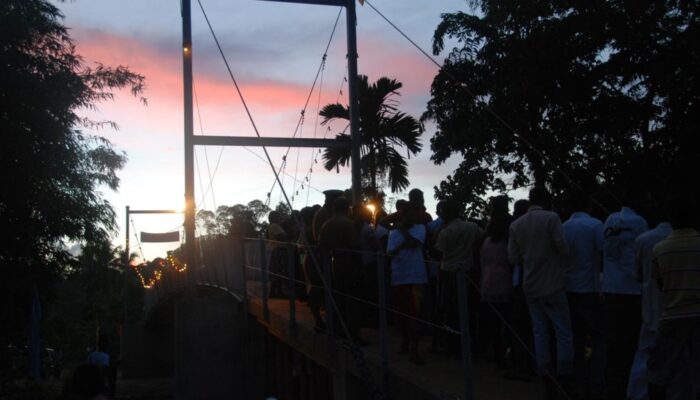
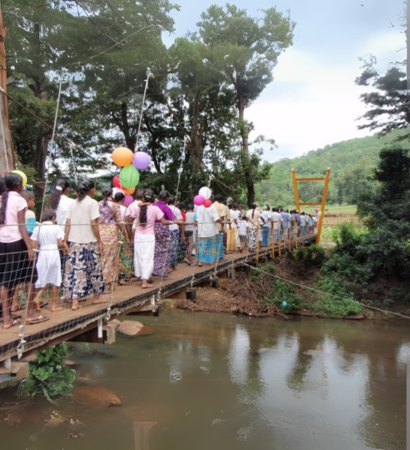
The ceremony began with a traditional Sinhalese procession to the bridge for the ribbon-cutting, which also served as the first live load test—50 people crossed the bridge in an exciting moment of anticipation.

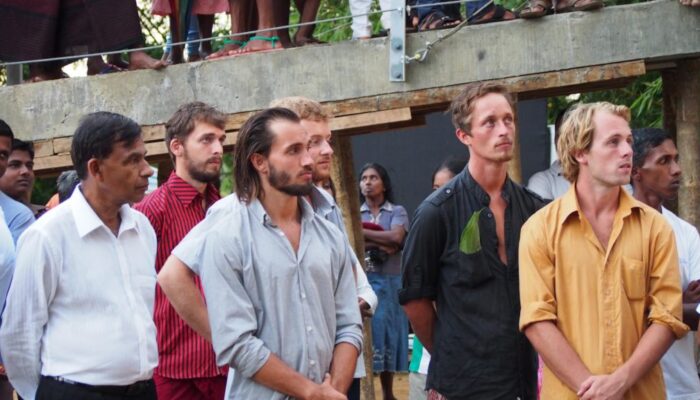
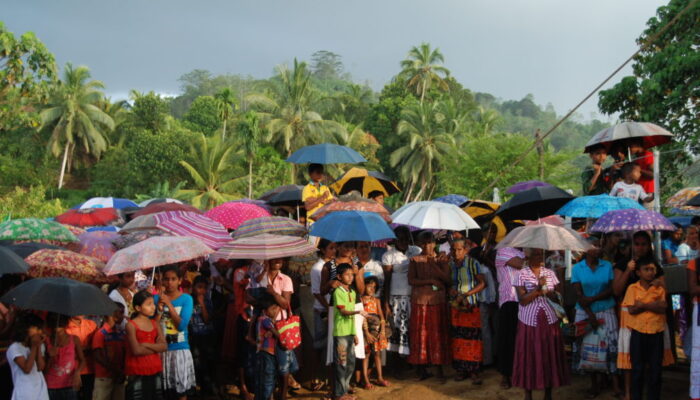
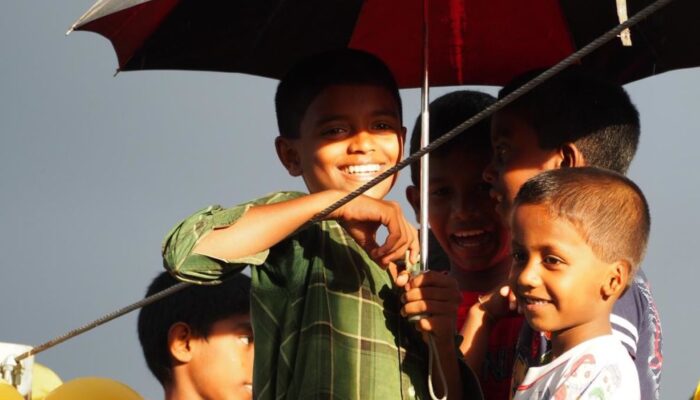
Following that, nearly 1,000 visitors joined before speeches were given by local elders, priests, regional ministers, and the Minister of Youth Affairs. Despite a brief shower, the celebration continued joyfully, enhanced by a rainbow appearing overhead.

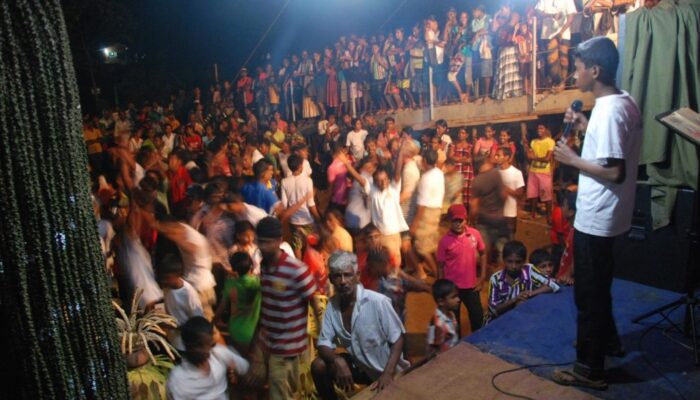
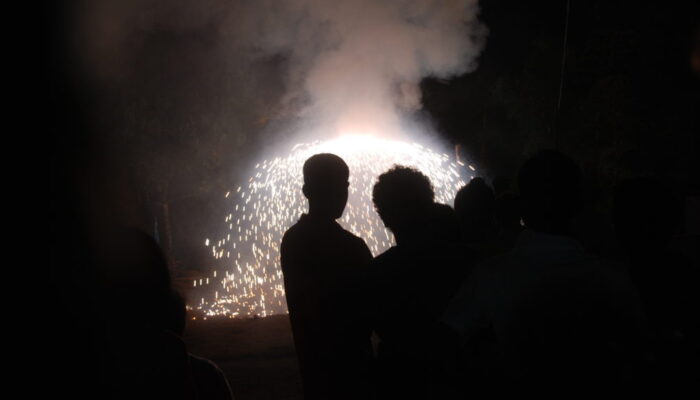
As night fell, fireworks lit up the sky, and live music began. The vibrations of the band’s music created a light resonance in the steel bridge, amplifying the sound and turning it into a dancefloor—bringing even the German team to join in traditional Sinhalese dancing with pure joy.

The ceremony was a resounding success—memorable, emotional, and a well-earned celebration for all involved.

  • Opening Ceremony
Gallery

Status:

Completed

Location:

Karawwa, Ratnapura.

Category:

Community Project

Starting Date:

February 2010

End Date:

October 2013

Project Partners:

EWB Karlsruhe Institute of Technology (KIT), Germany
Project Details :

echofy
.

Call Us Anytime

+94 112 322 508

Partners of this Project

echofy OUR PROJECTS

Similar Completed Projects